
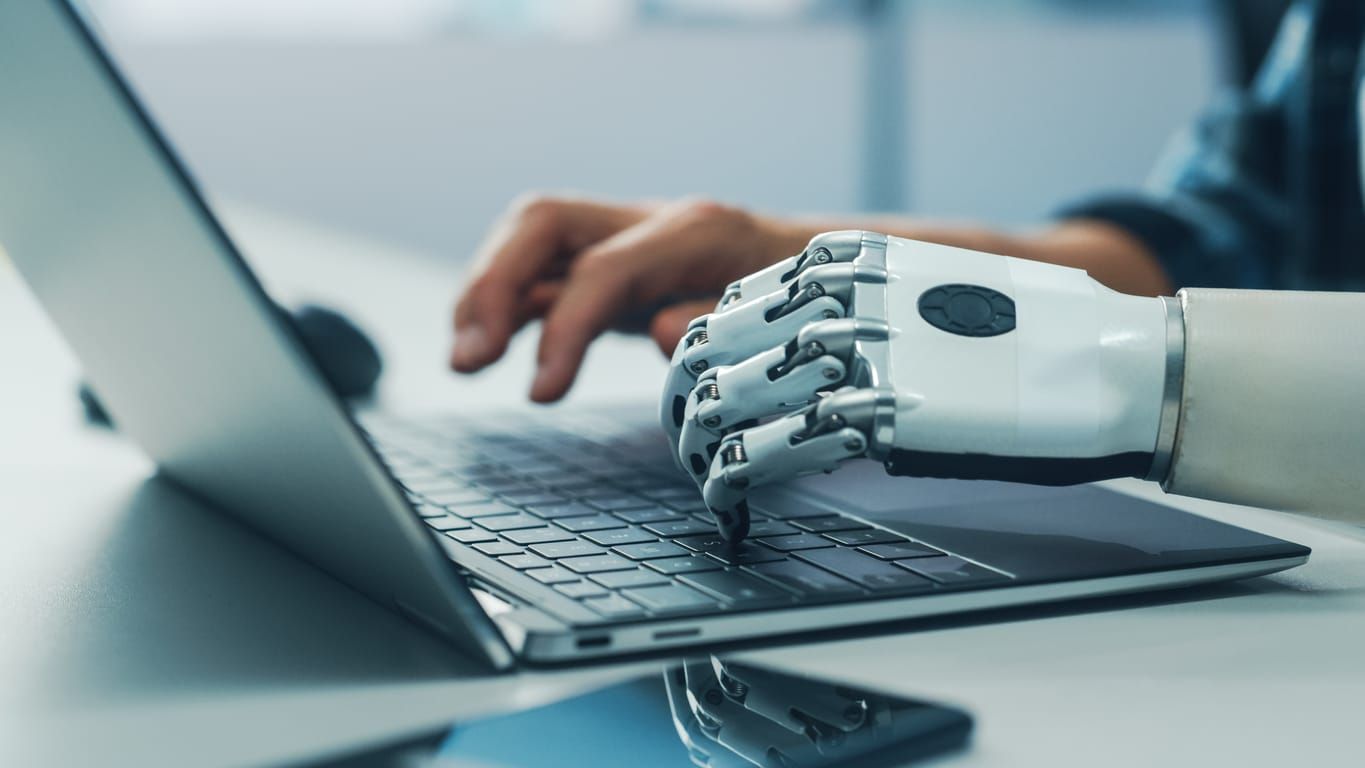
Back in my day, we expressed our own ideas through typos, bad grammar, and confusing sentence structure – and we liked it.
For the last few book projects, I have included an AI Disclaimer at the end. I hate having to do this, but between when I originally signed those contracts and when the manuscripts were completed, debates about and use of generative AI have exploded. Emotions are running high, opinions are plentiful, and there are no simple answers to the big-picture questions about the future or current use of AI, generative or otherwise.
For years, I've been using some form of AI in my digital life: accessibility tools, spellcheck, autocorrect, navigation, grammar check, etc. Few of us are pure in our digital life, so there is no judgment from me, only transparency about how I choose to use or not use AI in my writing discipline.
I am committed to not using any form of generative artificial intelligence in any part of my writing process.
I have written about this when it comes to my sermon writing, but I do this because the struggle, the frustration, and the urge to throw my laptop against the wall are part of the process. No matter how stuck I feel, I will never use ChatGPT, Claude, Gemini, or any other AI platform at any stage of my writing. By doing this, not only is the content I offer a genuine expression of my ideas, but the scars and divots that may exist personalize my writing and offer depth and texture to the reader – at least I hope so.
The other significant reason I refuse to use AI in any generative way is that, at the end of the day, whatever is generated is theft. It is one thing to use someone's ideas with attribution or compensation, and quite another to scrape someone's ideas and pass them along as original, with no recognition given to the content's originator. As someone who makes a portion of my income from writing and has my writing scraped, I cannot stress this enough.
Oh . . . and the travesty of movements like Pax Silica that are wreaking havoc on the poor and giving the middle finger to environmental implications.
All of this goes to say, the future of writing is going to require some kind of AI disclosures, so here are mine:
- I use Living Writer for my long-form writing and have disabled all AI features.
- I use Google spellcheck, 98% of which is correct. I am part of the red squiggly line generation, and you're welcome.
- I use Grammarly suggestions for clarity, but never for content. We should all be grateful for this.
- I use voice recordings for idea tracking and voice-to-text, but never to generate or organize content.
- For images, 99% of my images come from iStock Photo, a paid image service. I am allowed to download and use them with or without attribution.
The idea that “the future is now” has never felt so true.