
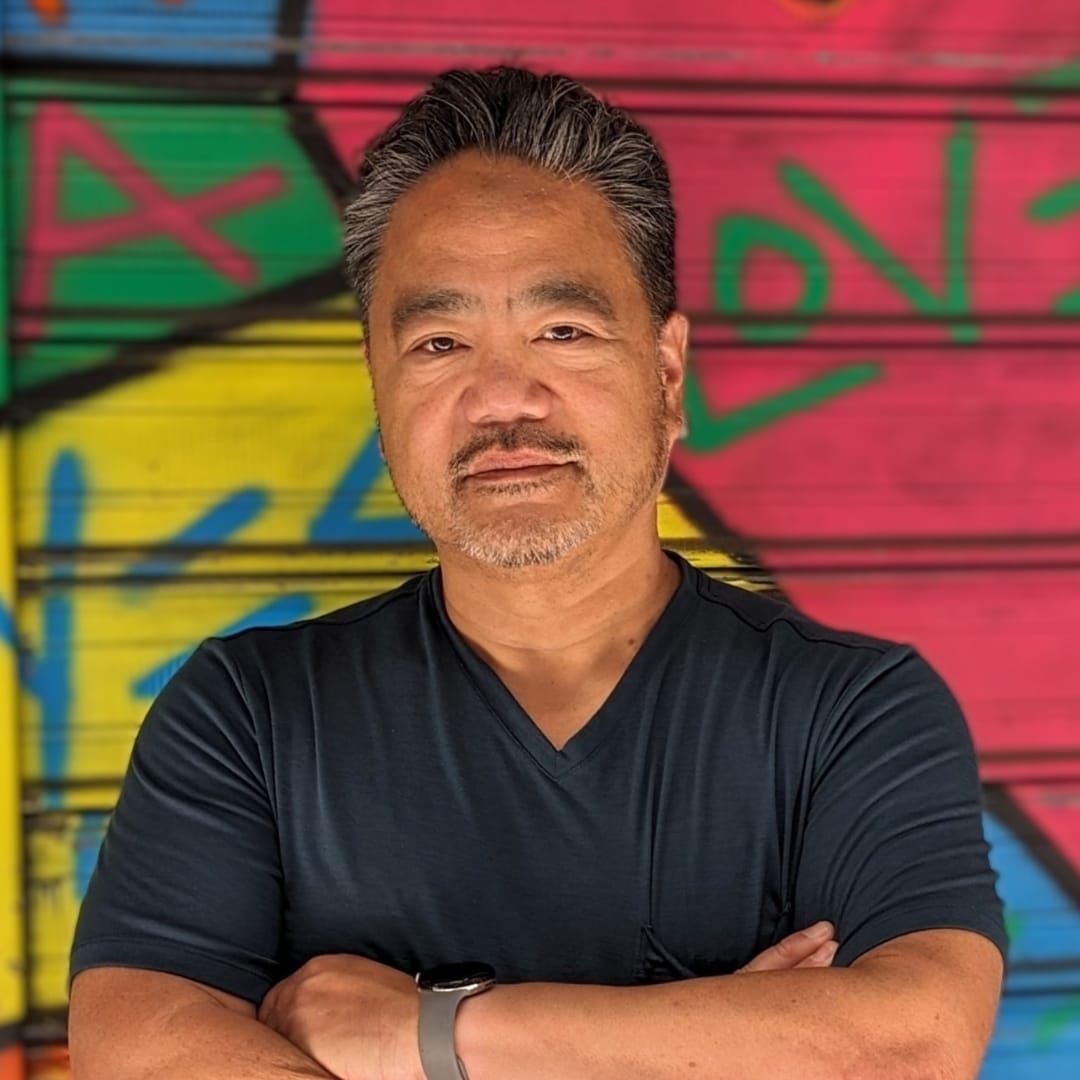
One of the things that brings my heart joy, makes my soul sing, and gives me hope for the world is when friends do amazing things. Yes, all of my friends are amazing humans, but the path to doing these things out loud and being recognized for their amazingness is not the same for everyone, especially in predominantly white institutions like the Presbyterian Church (USA). Yes, my denomination has made wonderful strides in many areas of the past decade and has many Black and brown folks in leadership, but no one should underestimate the work, perseverance, and community that it takes for folks of color to be seen as equals.
So when Laura was called as the Transitional Executive Presbyter at the Presbytery of San Francisco, the community rejoiced. For those of us who have been around a while, we know that the search processes to which we are often invited often do not lead to the offer. One has to be exceptional. San Francisco, the Presbytery where I have spent the bulk of my ministry, is no joke, but with great activism, passion, and personalities come great chaos. From all accounts, Laura has been a healing and healthy leader for a presbytery community in turmoil more often than not.
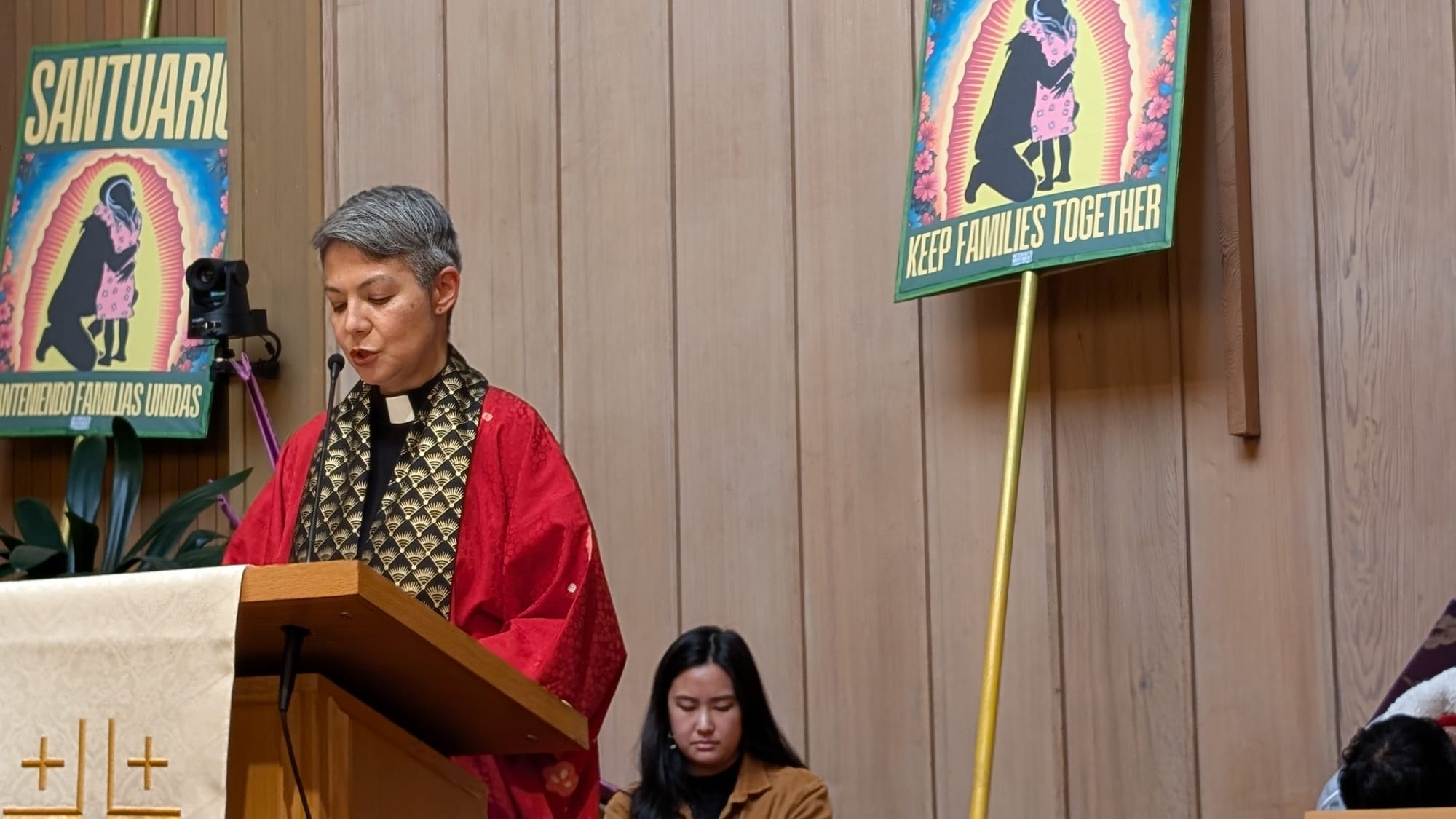
One of the ways I have been moved by Laura is through the words she shares with the communities she leads. I have rarely been able to hear her preach, but when I have, I have been stunned by how she applies the craft. She somehow manages to powerfully challenge our soul and lovingly poke us in the eye, and all the while finding ways to draw us in, make us laugh, and speak to what we need to hear at that particular moment in time. I consider very few folks in my immediate world excellent preachers – Laura is one of them.
Last week, word of the banger of a sermon Laura delivered at a recent event started showing up in my socials, chats, and channels. Not being there, I only got bits and pieces from the online community and the PC(USA) News Service, so I asked if she was willing to share it.
With permission, here is the sermon text my colleague, friend, and sibling in Christ, Rev. Laura Mariko Cheifetz delivered at the closing worship of the 227th General Assembly of the Presbyterian Church (USA) on July 2, 2026, in Milwaukee, WI.
Here is a video recording of Laura's sermon moment. This is the kind of sermon that we should all play on the same Sunday. If you would like to view the worship service in its entirety, it is shared at the bottom of this post, just after her bio.
Scripture - Isaiah 58:6-12 (NRSVUE)
I bring you greetings from the Presbytery of San Francisco, land of the Ohlone people who were its first stewards, Alta California before the United States took it from Mexico. We are 67 congregations and 15 new worshiping communities strong. We are the collision of the sacred and the suffering, the brutal and the beautiful, and we do our ministry in English, Spanish, Korean, Cantonese, Mandarin, Portuguese, Tagalog. We do our ministry in jeans and robes, hanbok and haori, guayabera and drag. We are yours, and you are ours, siblings in Christ. It is our privilege to be in this together with you.
Let us pray.
Let the words of my mouth and the meditations of our hearts be acceptable in your sight, O Lord, our Rock and Redeemer. Amen.
I am here to preach about healing, picking up on the thread explored so beautifully earlier this week on leaves of the tree for the healing of the nations.
The audacity to believe that we, here, in a mainline Protestant denomination, could be agents of healing, when we helped make this country exactly what it is becoming, the original Christian nationalists, perpetrator of the heresy of believing God gave us the right to own other human beings for profit, of the shameful sin of believing we deserved this land and the original stewards should be pushed aside and contained or eliminated.
I shouldn’t be up here. Not only because I never took a preaching class in seminary…
But because I am not the story this nation is officially celebrating on July 4th on its 250th birthday. I am a queer biracial woman, the daughter of the first in their family to marry outside the race, in a same-gender marriage, descended from people who made their way from Japan and eastern Europe, of Ashkenazi Jewish descent, ordained to ministry. I am a middle-aged normie, as boring as they get, I have lived in the west and the east and the midwest and the southeast, and I can guarantee you when the media profiles “real Americans,” it will never be my face.
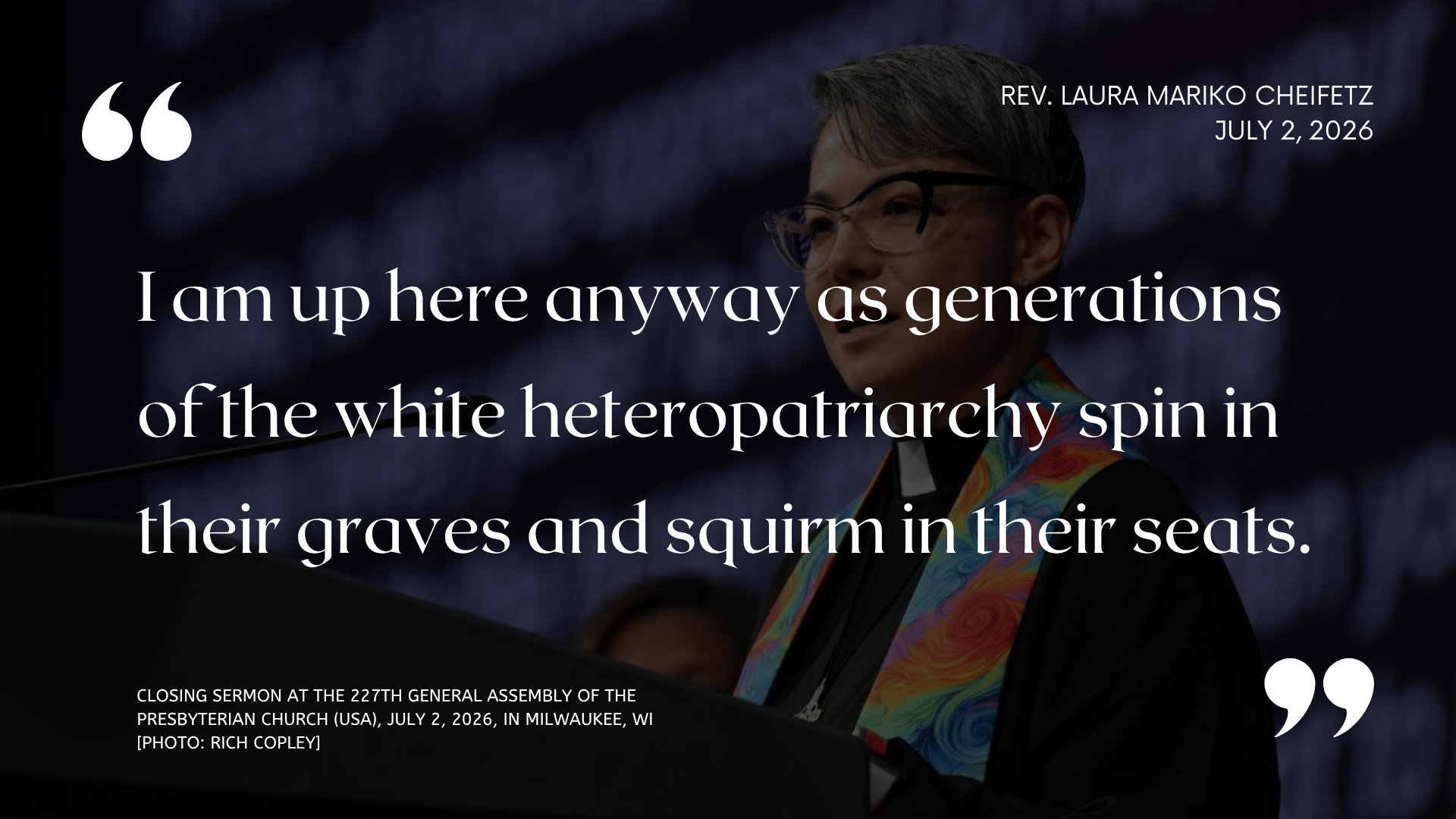
But here we are, we have spent decades saying we were wrong then, we must do differently now because of our faith. And here I am, I am up here anyway as generations of the white heteropatriarchy spin in their graves and squirm in their seats. This is the task, and the only way out of any difficult moment is through, so let's dig into it together.
We are here in chapter 58, part of what is known as third Isaiah. The first part of the book of Isaiah is focused on God’s judgment against Israel and Judah, preceding the Babylonian exile, when a large portion of the people were taken into captivity in Babylonia, humiliated and stripped away from their land, their people, and their God. The second part of the book is focused on the return of these exiles, with words of comfort and hope for the restoration of the people after this massive trauma of displacement. And in third Isaiah, this section of the book, the people were trying to rebuild. They had been enslaved, displaced, humiliated, and exiled - and now they were trying to make another go of it. This time, who would they be?
Well, based on how the prophet speaks to them, they are not doing a great job. And here they are rebuked. The restoration for which the prophets had yearned, had hoped for so long, was not borne out in the reality on the ground.
Isaiah 58 begins: “Announce to my people their rebellion,
to the house of Jacob their sins.”
The passage we read is about worship.
This is a reminder that being a faithful person is not just the external outward signs of worship, it is also that worship and fasting must be accompanied by acts of justice, and that all of this together indicates righteousness. A beautiful worship service while the poor and hungry are shut outside of your fancy gates doesn’t cut it. An eloquent prayer when one ignores the immigrant and the widow doesn’t pass muster. Quoting scripture while mistreating your employees will not make you righteous. Declaring oneself agents of a true faith while committing spiritual violence against your siblings will not make you holy. Spirituality, expressed here in third Isaiah, is not about what goes on inside one’s heart. It is also what one actually does out there in the world.
This is an expansion of the understanding of worship. This passage says worship is not only the parts we think of, the liturgy and the music and the standing up and sitting down and the passing of the peace. Worship is also the healing of the broken, the feeding of the hungry, the justice for the oppressed, the real manifestations of God’s love that can be seen and held, that make a real difference in the real world.
“if you offer your food to the hungry and satisfy the needs of the afflicted, then your light shall rise in the darkness and your gloom be like the noonday.”
Justice and righteousness are integral to the spirituality of our faith. The ancient ruins will be rebuilt, the foundations of many generations will be raised up, a people will be known as the repairer of the breach, the restorer of streets to live in.
If we are really going to do this, then something will be required of us, not just as hearers of this scripture, but us, specifically.
What does it even mean to bring healing to a world in such desperate need of it, when we, inheritors of a religion of empire and a patriotism built of death and domination, are the ones who are so broken, everything we thought we knew and who we thought we were is up for grabs, when things we thought we were good at it turns out maybe don’t work anymore. And here is where we are called to have faith.
I do not mean faith as a cliché, an anemic, meaningless word used as a weapon against those who disagree with us.
I mean faith as the foundation, the backbone, the rebar. Faith as the love of a grandmother, the water the salmon swims in, the air we breathe, the soil in which the redwoods and the peach trees and grapevines grow. The faith that is strong enough to name evil for what it is. The faith that calls us to struggle with what ails us, what is really wrong with what we have done, instead of skipping to a quick symbolic action, as though our sins were written on an etch-a-sketch instead of upon the earth.
But our sins are undeniable. They are stamped on us and on the earth… In Topaz, Utah, where my grandmother and her family were incarcerated during World War 2 for the crime of being Japanese American, the outline of that American concentration camp that held Japanese Americans and Japanese people prohibited from seeking U.S. citizenship by law, can still be seen from space. The earth holds the visible outline of that sin and it cannot be undone.
Faith calls us to know these sins in our bones.
We do not have faith.
Faith
has
us.
I think faith exists with or without us, that God holds us even when we have let go, that our collective faith is so everpresent that we as individuals may take a break, have a moment of doubt, step away, but the faith in and of itself will go on forever, the communion of the baptized is always ready to receive us back, and the grace of God catches us in its stream, carrying us gently in those times when we can no longer manage to swim.
This faith that will make even us agents of healing.
Where I serve is filled with people yearning for God’s love, committed to sharing that love with the world.
Where do you hear God?
Where I serve, we hear God everywhere: in the vast silence of the forest, with the mighty redwoods, sequoias, oaks, towering over us.
We hear God in the busy chatter of the street, over vendors, in the voices of immigrants and descendants of immigrants calling for justice, where we leave our church buildings and go out into the world.
We work to end systemic racism, nurture our congregations and our partners, believe Black Lives Matter, transgender people are sacred, too.
We seek to make things right by feeding our neighbors, serving hot meals, handing out bags of food from the food bank and produce from the church garden, going to encampments of neighbors who live outside to distribute toiletries and a meal.
We seek to heal by showing up for our immigrant members and neighbors, providing cash assistance to those unable to support themselves because of this administration’s cruel and punitive approach to those who are refugees and immigrants. We go with them to court, stand outside in vigil with prayer, snacks and songs, cups of coffee, toys for the children (there are so many children going to immigration court). We connect the struggle for immigrant rights with the struggle to end state violence for all people. Carceral violence is carceral violence, whether it is inflicted by the state or a private corporation.
Are not your hearts broken, too? Because my heart is broken. Beyond the individual griefs I hold, I know we are a people who changed almost nothing after Sandy Hook and Uvalde, because we have allowed our government to lock children up behind bars and put them in cages with impunity. Because the Supreme Court has shredded the Reconstruction amendments, the hard work of those who fought for human rights, because we are still supposed to get up and go to work and buy things and protest respectfully.
I am not so foolish to believe our heartbreaks are the same, but I know we are all human. Because grief comes for us all. Because it is part of a regular human life. And being a human is so brutal… and so beautiful.
We worship as faithful people, as whores and Philistines, as saints, holy and broken, sinful and sacred. We have managed to be both/and, to inspire each other and hurt each other, to gather in worship and say ridiculous things, sometimes in the same breath. We break each other’s hearts all the damn time, and those of us who have been so deeply wounded because we must live in a church that cannot help but treat us with contempt because we are Black or brown or foreign or queer or nonbinary or neurodivergent or disabled, because we are the ones who have to find our resilience, to convince the rest of you that our humanity deserves respect, that our people are beautiful and strong and brilliant, that our faith expression is not a branch but the roots.
But I want to think about our broken hearts in the context of being healing agents.
The moment our hearts break is the moment of possibility, where the breaks can make space for something different.
God is in the break.
In many genres of music, there is this part called the “break.” The “break” is an instrumental section, sometimes it’s the drum solo. It provides this space, where hip hop artists stretch out the time to allow for breakdancers to go wild, where jazz artists can shine, where the disco music changes completely for a moment.
Poet, youth spoken word pioneer, and non-profit leader Michelle “Mush” Lee says “The break is the moment the song almost collapses and that is exactly where the freedom is.”
Don’t you see that we are free? We worship a living God, a savior, who was executed, died, was buried, and descended into hell, and who, on the third day, rose again. We have already lived through death. We have been to hell and back. We have already lived through countless heartbreaks, survived and fought to stay in a church that had broken its promises long before it baptized us. We have already lived through schisms. We have lived through shared dehumanization, and always, we have limped back together through a faith that holds us. We are a forgiven people. We are a free people. We are a people who have been shown immense grace even when we did not deserve it. We are here because all this together, this sin and this beauty, in one painful gorgeous mix, made today possible. This is not to say “suffering is character-building,” but
we are the church we are
because we were the church we were.
Sometimes, in the midst of our own failures, the sins of our forebears surrounding us, the grief of knowing we have benefited from the very same conditions that cause so much suffering, we trip ourselves up and forget we are loved, forgiven, and freed.
In the book “My Friends” a teenager asked her friend’s mother, “Is it horrible being an adult?" ... "Unbearable," the mother replied. "You fail with almost everything, all the time.”
We forget that in this failure, in recognizing it, in breaking the heart open, our hearts have the chance to become bigger. A broken heart is the moment of possibility.
Every time we work to feed or house or clothe someone, every person who goes free because we worked together, every person who was told they were not enough and learn they are worthy because we make it so, we live into the possibility of healing that which is broken.
I am heartened by our conviction to bring healing and I am flabbergasted by our audacity to believe we can do so, but do not be confused about our role. We are not agents, we are collaborators, if only because we have no other choice. God is the one who heals and we are the ones sent.
Liberation is still both possible and inevitable.
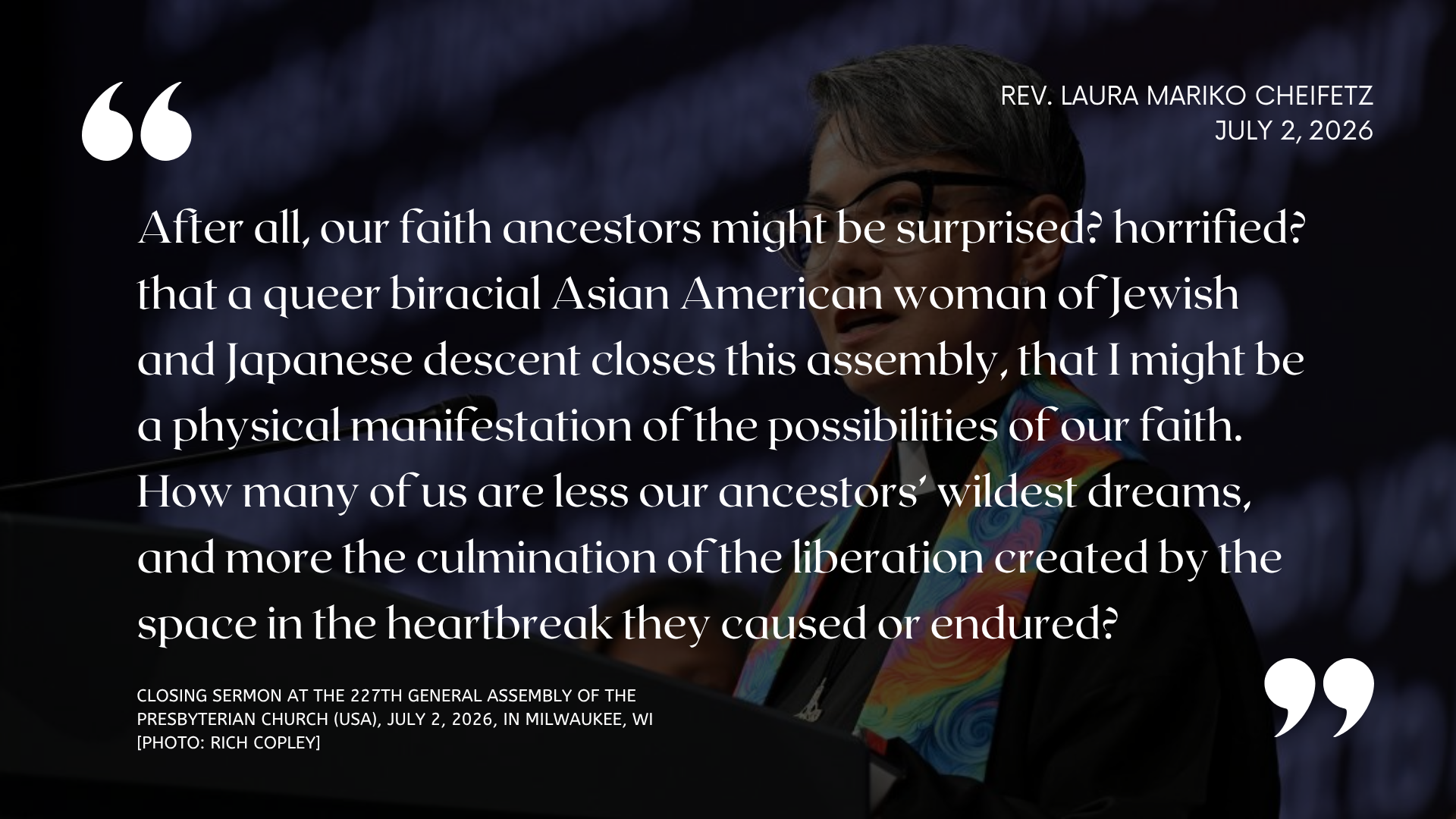
After all, our faith ancestors might be surprised? horrified? that a queer biracial Asian American woman of Jewish and Japanese descent closes this assembly, that I might be a physical manifestation of the possibilities of our faith. How many of us are less our ancestors’ wildest dreams, and more the culmination of the liberation created by the space in the heartbreak they caused or endured?
God’s healing will happen with or without us, “God will do whatever God must do,” said the preacher, and we are invited to join in. It is who we are, because of whose we are.
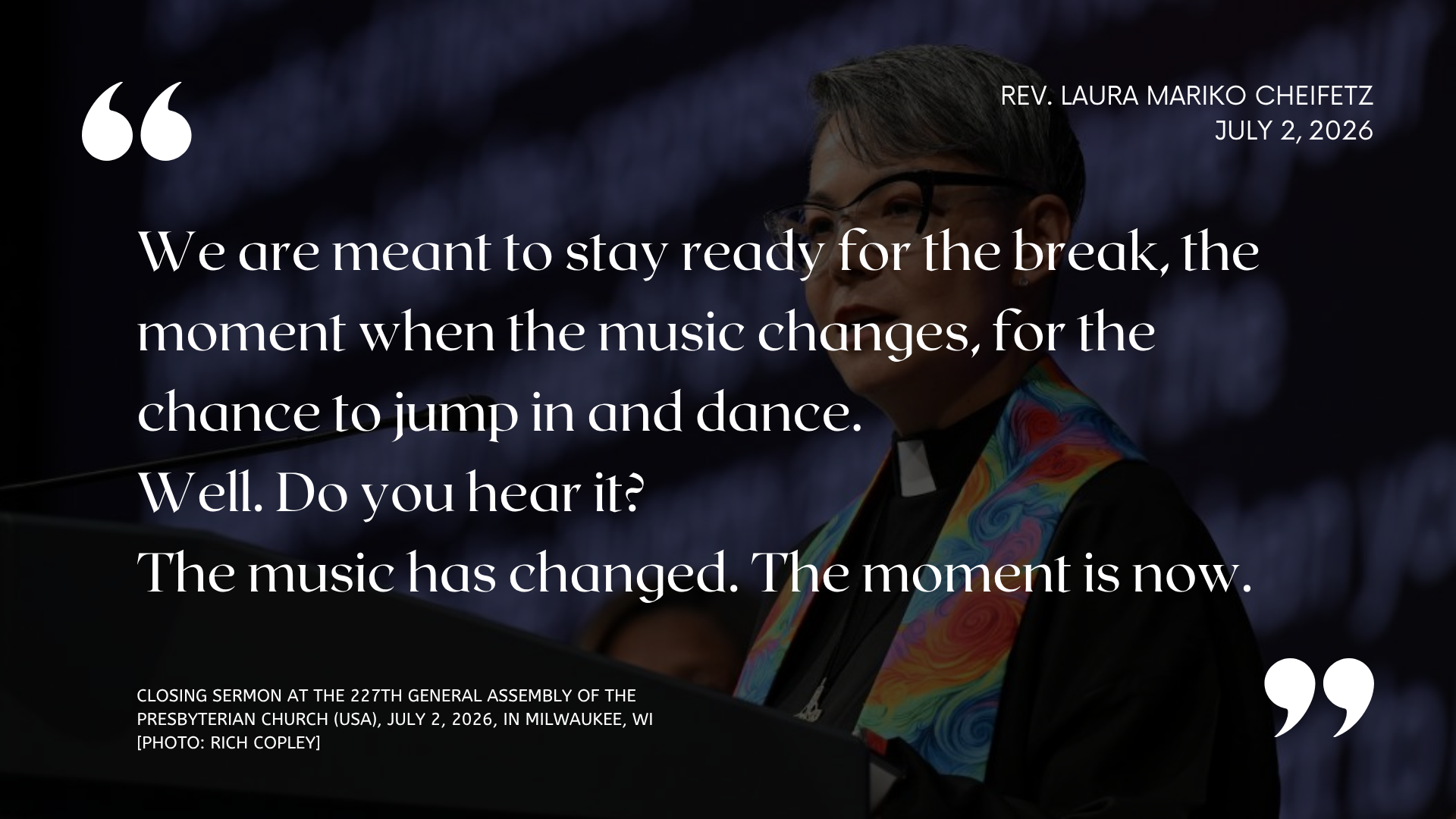
We are meant to stay ready for the break, the moment when the music changes, for the chance to jump in and dance.
Well. Do you hear it?
The music has changed. The moment is now.
Go to “remove the yoke from among you, the pointing of the finger, the speaking of evil,” because you too know what heartbreak is, the heaviness in your chest, the sick feeling in your gut. You have been on the other side, too.
Go to “offer your food to the hungry and satisfy the needs of the afflicted” because someone has accompanied you before, making sure you ate, making sure you knew you were loved.
Go to choose this fast, “to loose the bonds of injustice, to undo the straps of the yoke, to let the oppressed go free.”
Go with the audacity and obligation to be leaves of the tree for the healing of the nations, because you are forgiven and freed as Christ’s own. We are free!
Ready? Here’s the break. Dance!
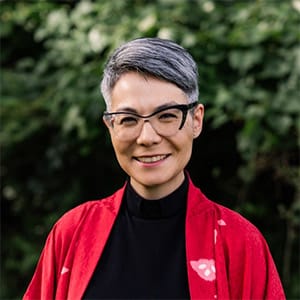
The Reverend Laura Mariko Cheifetz serves as the Transitional Executive Presbyter. A biracial Asian American queer ordained minister in the Presbyterian Church (USA), she has served previously in racial and gender justice advocacy, religious publishing, reproductive justice, and theological education in the Midwest, East, and Southeast.
Born in San Francisco, raised in eastern Oregon and western Washington, she is a double “pastors’ kid.” Laura is a graduate of North Park University (MBA, ’11), McCormick Theological Seminary (M.Div. ’05), and Western Washington University (BA in Sociology, 2000).
She is the co-author and editor of “Church on Purpose: Reinventing Discipleship, Community, & Justice” (Judson Press) and co-editor and contributor to “Race in America: Christians Respond to the Crisis” (Westminster John Knox Press), and a contributor to the documentary series “Trouble the Water: Conversations to Disrupt Racism and Dominance.” Laura's next project, "Crossing Shores and Horizons: Asian and Asian American Transnational Feminist Theologies" (Westminster John Knox Press) is due out in November, 2026.
She serves on the advisory team for Presbyterian Disaster Assistance and the board of PANAAWTM (Pacific Asian North American Asian Women in Theology & Ministry)
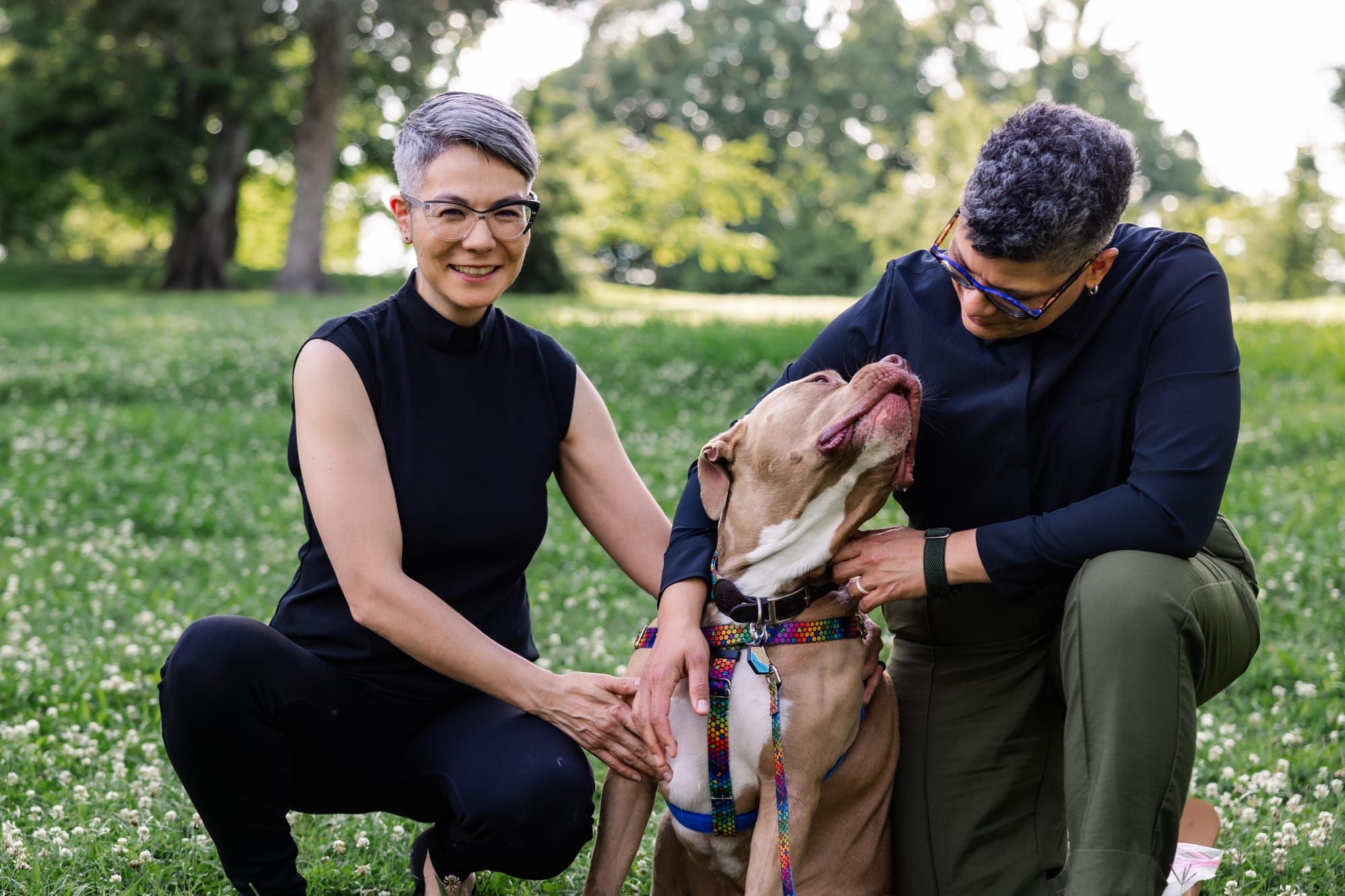
She lives with her partner and their rescue dog in the East Bay.
Laura's sermon text is being shared with her permission. Please do not quote without attribution to Rev. Laura Mariko Cheifetz. If you would like to contact Laura directly, she can be reached by eMail or on LinkedIn.


Member comments